

RACING FEEL FOR EVERY RIDER
MOUNTAIN BIKE SUSPENSION
Öhlins has been active in the mountain bike scene since 2013, bringing race-winning technology to MTB enthusiasts and athletes worldwide. Our range includes suspension for Downhill, Trail, and Enduro bikes, as well as a line of performance-oriented products for Cross Country.
WHAT IS MOUNTAIN BIKE SUSPENSION?
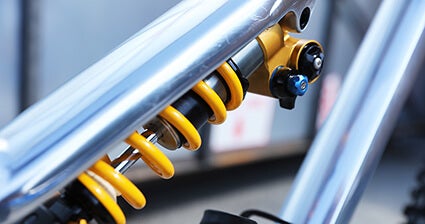
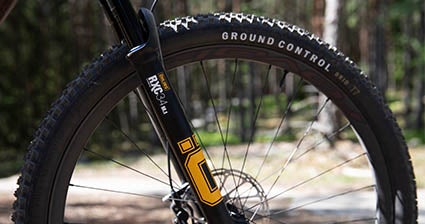
Mountain bike suspension is a system of dampers and springs designed to insulate you and your bike from the terrain.
When you ride over bumps, rocks, or uneven trails, suspension helps the wheels move up and down to absorb the impact — instead of the full force hitting your body. This makes your ride more comfortable and gives you better control of the bike, especially on rough and bumpy surfaces.
These are the main components of mountain bike suspension:
- Front suspension (AKA the "front fork"): The front fork absorbs shocks that come through your front wheel. It helps keep your bike stable and allows you to maintain control while steering and braking. Front forks are found on both hardtail and full-suspension mountain bikes. More on that later!
- Rear suspension (AKA the "rear shock absorber", or "rear shock" for short): The rear shock absorbs impacts on the back wheel, improving traction and control. It also plays a vital role in the comfort of your ride. Rear shocks are only found on full-suspension mountain bikes.
UPGRADE YOUR BIKE WITH ÖHLINS MOUNTAIN BIKE SUSPENSION
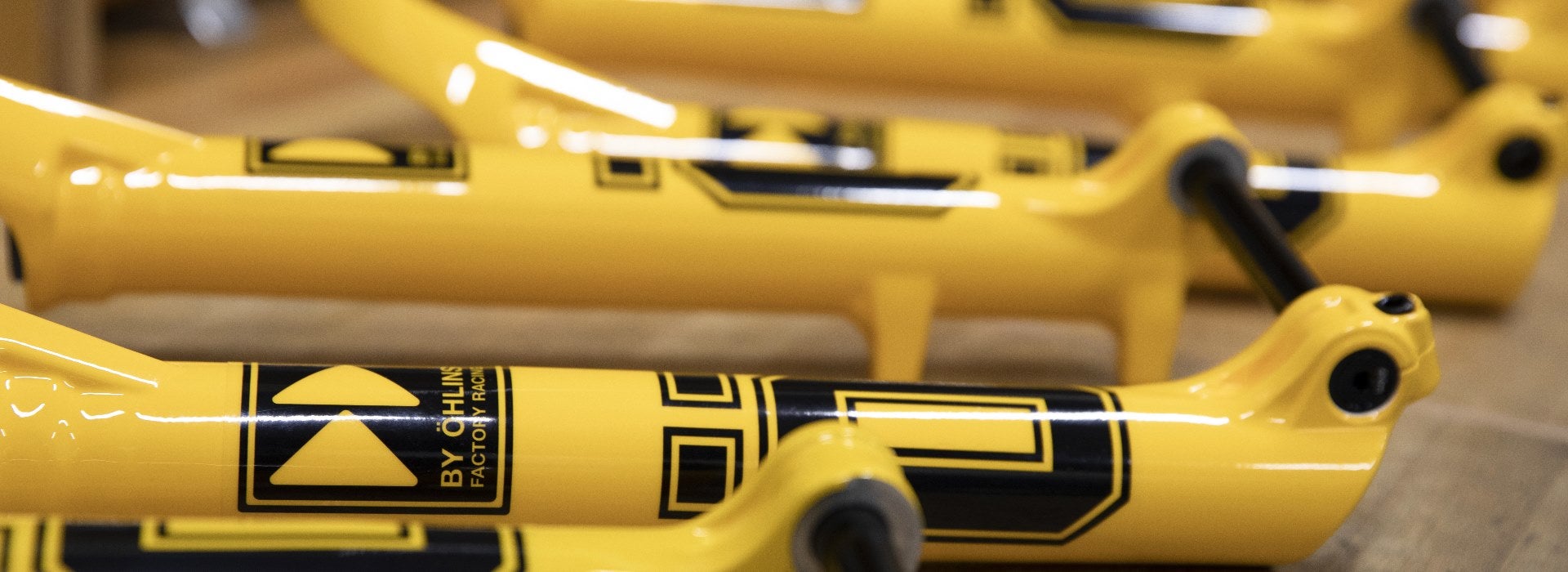
Öhlins offers a complete range of suspension products for mountain bikes, whether you ride a hardtail or full suspension MTB. Our front forks and rear shocks are available for a variety of disciplines, all engineered to meet the specific requirements of each. Trail, enduro, downhill, gravity, freeride, cross-country, “downcountry” — whatever your style, Öhlins delivers the ride feel you desire and the performance you demand.
WHY IS MOUNTAIN BIKE SUSPENSION IMPORTANT?
Mountain bike suspension acts as a powerful buffer between the rider and the terrain. It absorbs harsh impacts from rocks, roots, potholes — all the obstacles that would otherwise rattle you and your bike. Without it, you’d feel every hit at its full, unfiltered intensity.
Good suspension is essential for mountain bike performance and comfort. It boosts traction, control, and overall ride quality on uneven ground. That means more confidence in tricky technical sections and less stress — both on your body and your bike.
Enhanced Traction and Control:
By absorbing impacts from bumps and obstacles, suspension keeps your mountain bike planted on the ground. This prevents your wheels from losing grip and skipping around.
The result? Better traction, precise steering, and predictable handling. Suspension allows you to move deliberately and with control rather than reactively. Instead of fighting the terrain, you’ll have the confidence to master it.
Improved Comfort and Endurance:
Getting knocked and jostled by rocky terrain takes a toll on your body. MTB suspension soaks up these forces, so your muscles won’t have to.
If you’ve ever fallen victim to arm pump or rider fatigue, you know how quickly it can ruin the fun. Mountain bike suspension combats this phenomenon and improves your comfort. Even if things get bumpy, you’ll have the stamina to keep going.
Increased Speed and Efficiency:
Suspension prevents your mountain bike from bouncing over obstacles and helps maintain traction during climbs and descents. This improves pedaling efficiency and braking performance, giving you the support to sustain momentum on rough trails.
Your ride will be smoother and faster, especially with a full suspension setup.
Protection for Your Bike and Equipment
Repeated exposure to bumps and chatter puts stress on your bike. MTB suspension softens these impacts, extending the service life of your bike frame and other components.
This is also good for your wallet, helping you save on pricey repairs and replacement parts.
ÖHLINS FRONT AND REAR MTB SUSPENSION PRODUCTS
Öhlins offers a full range of components for front and rear MTB suspension.
Depending on your bike model, you can choose a hardtail or full-suspension setup. Both options are beneficial for performance and comfort. But combining the ride-transforming capabilities of a front fork and rear shock is where the real magic happens. Especially with Öhlins front forks and rear shocks, which we've designed to be used together.
Across our suspension range, every product delivers exceptional traction, control, and comfort for mountain bikes on demanding terrain. Backed by five decades of engineering expertise and race-bred technology, Öhlins’ MTB suspension is designed to fit most modern bike platforms. Riders across all disciplines, from DH to XC, benefit from the same performance that's made Öhlins a leader in mountain bike suspension.
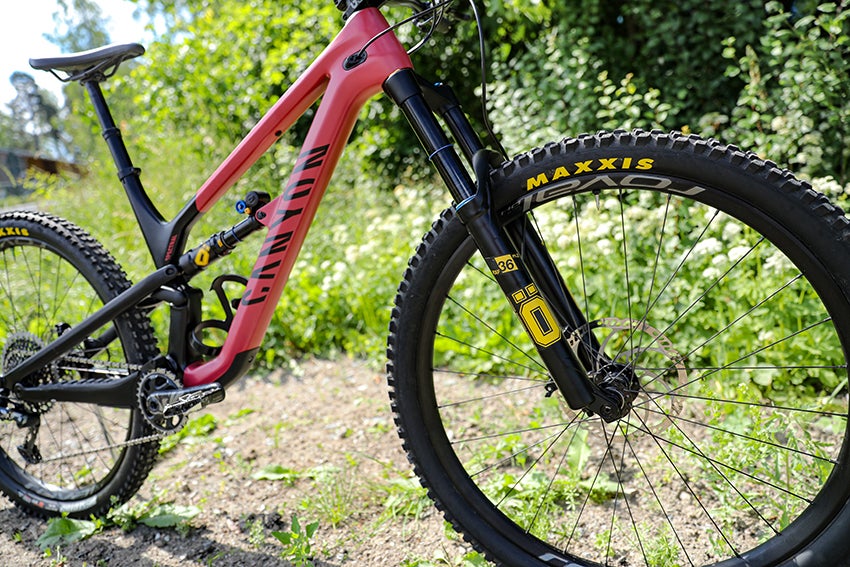
A full-suspension mountain bike, equipped with an Öhlins front fork and rear shock.
MOUNTAIN BIKE FRONT FORKS
Mountain bike front forks absorb impacts on the bike’s front wheel. Unlike rear shocks, which are only used on full suspension mountain bikes, you’ll find front forks on both hardtail and full-sus MTB models.
Front forks are engineered to keep your bike ultra stable and steerable on rough terrain. They enhance traction and control, keeping your front wheel glued to the ground when you’re tackling rocky trails or ripping descents. This allows you to ride more smoothly down steep hills and handle aggressive lines on the gnarliest ground.
What are the benefits of using a mountain bike with front forks?
- Stability: Front forks act as a shock absorber, neutralizing forces that would otherwise deflect the front wheel and throw the bike off balance. This stabilizing effect helps you maintain more predictable lines when you're riding at speed or on technical terrain.
- Traction: Front forks maximize tire-to-ground contact, which is crucial for cornering and braking on rough terrain. They also control the speed of the wheel's movement, allowing you to follow the contours of the ground rather than pogo-sticking off of them.
- Control: By using internal damping, front forks manage how fast the springs compress and rebound, preventing erratic movement. This controlled action creates a stable platform, allowing you to steer and maneuver your bike more precisely.
- Comfort and Endurance: Front forks insulate you from high-frequency impact and vibrations from the terrain for a smoother ride. Reducing the shock transmitted to your bike's front end also lowers physical stress on your hands, arms, and upper body. This means you can enjoy longer, more comfortable rides with less fatigue.
- Speed and Performance: A bike that feels rock-steady, controlled, and predictable on the front end will inspire you to push the limits of its performance. Say hello to faster downhill times and the ability to navigate more aggressive, challenging terrain with confidence.
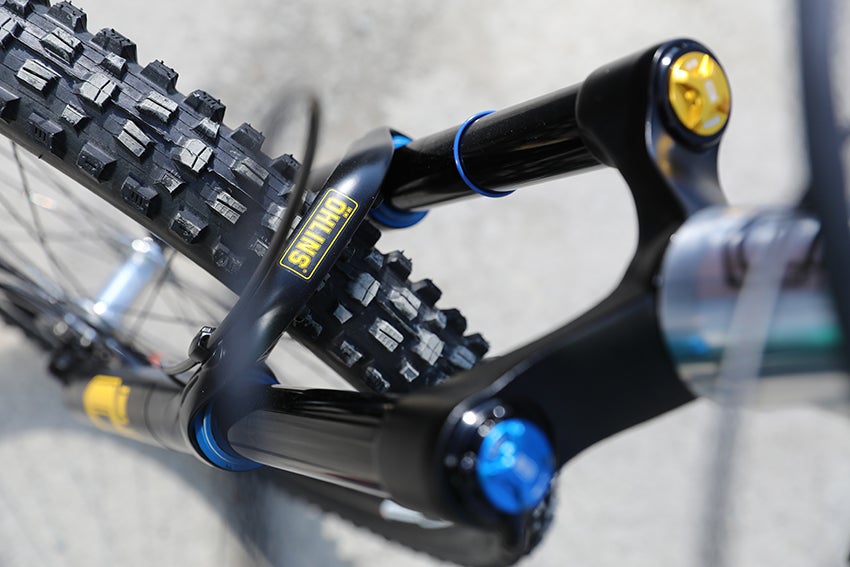
From the crown to the stanchion tubes, every detail is purpose-built to perfect your ride.
AIR FORKS VS. COIL FORKS
Öhlins offers two types of front forks—air and coil. Here are the features of both:
Air Forks
Air forks are prized for their lightweight construction and adjustability. Using air springs instead of coils means big weight savings and maximum climbing efficiency for XC, trail, and enduro riders. Air forks also offer a wide range of adjustment options, making it easy to fine-tune air pressure and progression. This can be achieved using a shock pump and volume spacers, giving you the ultimate versatility across different terrains and riding styles.
However, like air-sprung shocks, air forks require more frequent maintenance to keep the seals and internals in mint condition. They may also lack the small-bump sensitivity and linear performance that coil forks provide.
Coil Forks
Coil MTB forks are highly durable and deliver consistent performance, ride after ride, without the need for constant tuning. Downhill and technical riders appreciate the small-bump sensitivity and linear, predictable handling of coils. Because they don’t require air seals, coil forks are also less maintenance-intensive than air forks.
However, coil forks are significantly heavier than air forks, which can make climbing and long rides more taxing on your body. And while the smooth performance of coils is unmatched, they offer limited adjustability, requiring specific springs to match your weight and riding style.
What are the advantages of Öhlins MTB front forks?
Performance and Ride Quality
Öhlins MTB front forks are built with high-quality components for exceptional durability. Like our rear shocks for mountain bikes, our front forks are based on TTX damping tech. Riding on TTX-equipped forks gives you controlled, fade-free performance on the front end, enhanced by a noticeably smoother ride feel.
Setup and Tuning
Our front forks also offer a range of adjustments for the springs and damper settings, namely rebound and both high- and low-speed compression. Many fork models come in air and coil options, so you can choose the spring type that best suits your riding style.
MOUNTAIN BIKE REAR SHOCKS
Rear shocks effectively absorb impacts on the back wheel when you're out riding.
Öhlins’ rear mountain bike shocks are engineered to give you superior traction and control in diverse terrain. This helps to stabilize your bike, keeping your wheels planted on the ground when you encounter an obstacle. Our rear shocks also mellow the harshness of uneven ride surfaces for a smoother, confidence-inspiring ride quality — no matter what comes your way.
What are the benefits of using rear shocks on your mountain bike?
- Traction: By compressing and rebounding upon impact, the rear shock allows the back wheel to follow the contours of the terrain. This keeps the tire in constant contact with the ground, helping you achieve maximum grip during steep climbs and high-speed cornering.
- Control and Stability: The rear shock's internal damping system manages energy, preventing harsh, erratic movements and uncontrolled bouncing. The result is a more predictable, stable ride quality to bolster your confidence on technical terrain.
- Comfort: Rear shocks for mountain bikes soak up and filter out the forces from bumps and chatter before they reach you and your bike. Over long distances and marathon riding sessions, this reduces discomfort and physical strain so you can enjoy the ride.
- Endurance: By damping the forces generated by impacts, the rear shock reduces the physical demand placed on the rider. This delays the onset of exhaustion, giving you the stamina you need to push longer and unlock your new personal best
- Speed and Momentum: When you hit an obstacle, the rear shock keeps your bike moving in a linear motion rather than being bucked off course. This allows you to reach and sustain higher speeds, even on rough and challenging terrain.
AIR SHOCKS VS. COIL SHOCKS
Öhlins offers two types of rear shocks — air and coil. Here’s a breakdown of both:
Air Shocks
Air shocks are the best option for most riders. Since they don’t rely on a bulky metal spring, air shocks are generally much lighter than coil shocks. This makes the bike feel zippier and more agile. Air-sprung shocks also have a progressive feel, providing added support and bottom-out resistance on hard hits. Plus, they’re simple to set up and tune for every rider.
However, air shocks usually require more service and maintenance. Not only can the air chambers wear over time, but they’re also exposed to more friction and “stiction” (static friction) than coil shocks. This is due, in part, to the many seals they use to create an airtight chamber. More seals = more frequent cleaning and regreasing.

One of our popular air shocks — the TTX1 Air m.2
Coil Shocks
Coil shocks are the best option for riders who require durability and performance in extreme riding conditions. This mainly applies to downhill, gravity, and enduro riders who tackle steep descents and more technical terrain.
Metal coils are sturdy — they’re built to last through heavy use. They’re also less sensitive to temperature changes than air springs. This means consistent, reliable damping behavior, even on challenging sections of your ride. And because coil shocks have a simple design with fewer seals, they’re easier to maintain.
One of the downsides of coil shocks is that they’re heavy. While they keep the bike feeling sturdy and grounded on punishing tracks, they lack the lively, punchy performance many riders prefer. In general, they’re also less adjustable than air shocks.
What are the advantages of Öhlins MTB rear shocks?
Performance and Ride Quality
Öhlins MTB rear shocks are based on our TTX twin-tube design. Developed from racing-grade technology, TTX MTB shocks are optimized for consistent, predictable damping performance. Even with Öhlins’ air-sprung rear shocks, you’ll enjoy a smoother, more coil-like experience than your standard air shocks. They provide a controlled yet responsive feel, even during aggressive riding.
Setup and Tuning
- Air Shocks: Our rear air shocks offer a wide range of settings and tuning options. You can easily adjust the air volume, stroke length, compression (both high- and low-speed), and rebound damping to suit your bike, weight, terrain, and riding style.
- Coil Shocks: In contrast to other models on the market, Öhlins’ coil shocks are optimized for extra adjustability. We make it easy for riders to change the spring and stroke length no tools required. Our coil shocks also feature an extended adjustment range for compression (both high- and low-speed) and rebound damping.
FIND THE RIGHT ÖHLINS MTB SUSPENSION FOR YOUR RIDING STYLE
|
Riding Style / Discipline |
What You Want From Your Suspension |
Recommended Products |
|
CrossCountry (XC) – long rides, climbs, mixed terrain |
Lightweight design, efficiency, and enough damping for small bumps |
Fork – RXC 34 |
|
Downcountry – fusion of XC and trail riding, long rides, climbs and descents |
XC damping characteristics with longer travel for confident descents |
|
|
Trail / All-Mountain – mix of climbing and descending, forest trails, moderate terrain |
Balanced damping characteristics – comfort and control both uphill and downhill |
Fork – RXF36 |
|
Enduro / Aggressive Trail – steeper, rougher descents and technical climbs |
More travel, more damping control, robust design |
Fork – RXF38 M.2 |
|
Downhill / Freeride – steep descents, big hits, jumps |
Maximum impact absorption, high control, endurance on climbs |
Fork – DH38 Shock – TTX22 |
GET THE PERFECT SUSPENSION SETUP
Quick and easy to use, the Öhlins Performance Suspension Guide gives you a personalized and optimized upgrade plan to take your bike and riding experience to the next level.
HOW TO SET UP YOUR SUSPENSION
To set up your MTB suspension, start by adjusting the sag, which is how much the suspension compresses under your weight. This helps ensure that the suspension works properly. Follow the steps below to set up your bike:
1. Set the sag: Sit on your bike and check how much the suspension compresses. Aim for about 20-30% compression for the front and rear suspension. If you have a fork with a three-chamber system, such as the Öhlins RXF38 m.2, it’s important to fill the ramp-up chambers with air before proceeding with the rest of your setup process.
2. Adjust rebound: This controls how fast the suspension returns to its original position after compressing. Set it to where the suspension feels smooth without bouncing too much.
3. Set compression: This controls how stiff or soft the suspension feels when you hit bumps. You can adjust this setting depending on the type of terrain you ride on. We recommend setting compression either during or after your ride. This way, you can test the factory settings first and see if they work for you. Instructions for setting compression are included in our product manuals.
Once you’ve made the adjustments, take your bike for a test ride to see how it feels. Fine-tune the settings based on how it rides.
SUSPENSION MAINTENANCE AND SERVICE
To keep your MTB suspension in top shape, regular maintenance is important. Follow our quick guide below.
1. Clean your suspension: After every ride, wipe down your fork and shock to remove dirt and debris, especially around the seals. Check the air pressure: For air-sprung suspension, make sure the air pressure is correct for your weight. Low pressure can make the suspension too soft, while high pressure can make it too stiff.
2. Inspect for leaks: Check for any signs of oil or air leaks, especially around the seals. Leaks can have a detrimental effect on performance.
3. Service your suspension: Every 50-100 riding hours, or once a year, take your suspension in for a full service. This includes cleaning, changing the oil, and replacing seals. Depending on the riding conditions, you can also perform a lower leg service at more frequent intervals. Cleaning the legs and replacing the oil helps lower friction for optimal performance.
ON SOCIAL MEDIA


